

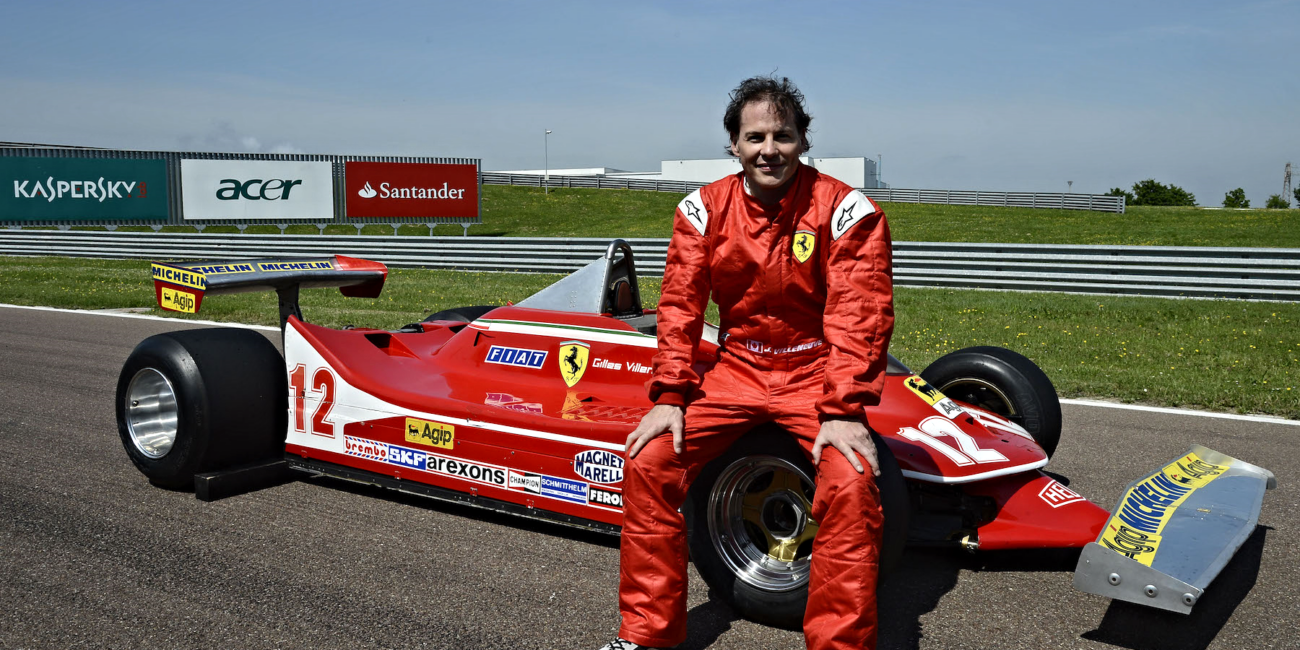
Canada’s Formula 1 story is not built around one clean pattern. Gilles Villeneuve became a symbol of instinct and bravery. Jacques Villeneuve turned a famous racing name into a world title. Lance Stroll has lived with modern scrutiny from the moment he entered the grid. Nicholas Latifi carried a different kind of pressure, where one late-race moment could distort the public memory of an entire career.
That range makes Canadian F1 more interesting than a simple ranking of results. Fans in Canada now follow the sport through race broadcasts, onboard clips, driver radio, data graphics, social debate and adjacent digital habits, including searches around betting websites ontario. But the deeper sporting question is still about pressure: how different Canadian drivers faced it, absorbed it and became part of the country’s motorsport identity.
Looking at Jacques Villeneuve, Lance Stroll and Nicholas Latifi together gives a useful modern frame. They are connected by nationality and F1 visibility, but their careers speak to three separate realities: legacy pressure, expectation pressure and reputation pressure.
Jacques Villeneuve and the pressure of inheritance
Jacques Villeneuve entered Formula 1 with a surname that already carried emotional force. Gilles Villeneuve was not just remembered as a Canadian driver. He became part of Ferrari folklore and one of the sport’s most powerful symbols of commitment, risk and raw speed. For Jacques, that meant every achievement was read through a family lens before it was read on its own.
That is the difficult part of inherited reputation. It can open doors, but it can also narrow the way people interpret a career. Every strong result becomes proof of destiny. Every mistake becomes evidence that the comparison was too heavy.
Jacques did something rare: he made the family name bigger without being swallowed by it. His 1997 world championship gave Canada its only Formula 1 drivers’ title and gave his own career a fixed place in F1 history. It also changed the meaning of Canadian success in the sport. Canada was no longer only the country of a beloved cult hero. It had produced a world champion.
His career still carries a useful lesson for Canadian sport. Legacy does not become lighter when an athlete succeeds. In many cases, success only makes the spotlight sharper. Jacques’ achievement was not escaping the Villeneuve name. It was adding a different chapter to it.
Lance Stroll and the pressure of constant explanation
Lance Stroll’s pressure is different. He did not enter Formula 1 with a world champion father or a mythic racing surname, but he did arrive into one of the most judgment-heavy eras the sport has ever known. Social media, live timing, race clips and constant comparison have made patience rare.
Stroll’s career has often been discussed through the lens of opportunity, backing and expectation. That can obscure the sporting reality that any F1 driver must still survive qualifying margins, tyre windows, wet sessions, street circuits, restarts and teammates. Money can place a driver near the door, but it cannot brake at Turn 1, save a car in the rain or score points in traffic.
His strongest moments have usually come when conditions are unstable. Wet-weather confidence, opportunistic race starts and podium-level results have shown that he is not simply a passenger in the story. At the same time, his career has also shown how hard it is to change a public frame once it forms.
For Canada, Stroll represents a modern athlete’s burden: being evaluated not only by what happens on track, but by the arguments surrounding how he got there. That is a different kind of pressure from Jacques’ legacy. It is less romantic and more repetitive.
Nicholas Latifi and the pressure of a single narrative
Nicholas Latifi’s F1 career is often compressed into one late moment in Abu Dhabi in 2021. That is understandable in a media sense, because the incident happened in one of the most controversial title finales in modern F1. But it is also unfair as a complete sporting judgment.
Latifi reached Formula 1 through the long junior ladder and raced for Williams during a difficult period for the team. That matters because driver evaluation in F1 is always shaped by machinery. A driver in a slower car has fewer chances to produce highlights, fewer chances to control race narratives and more chances to be remembered for errors than for steady work.
His Canadian identity also sits differently from Jacques or Stroll. Jacques had championship weight. Stroll has ongoing visibility as an active driver. Latifi became a case study in how quickly public reputation can harden when global attention falls on one incident.
That is why his career is valuable to discuss. It reminds fans that pressure is not only about winning. Sometimes it is about remaining professional when the loudest version of your story is not the fairest version.
Three Canadian careers, three pressure models
The contrast between Jacques Villeneuve, Lance Stroll and Nicholas Latifi becomes clearer when each is viewed through the type of pressure he carried.
|
Driver |
Main pressure type |
Canadian F1 meaning |
Useful sporting lesson |
|
Jacques Villeneuve |
Legacy pressure |
Turned a famous surname into a world title |
Inheritance can become achievement, not just comparison |
|
Lance Stroll |
Expectation pressure |
Represents modern Canadian presence on the grid |
Public framing is hard to escape, even with real results |
|
Nicholas Latifi |
Reputation pressure |
Shows how one incident can dominate perception |
Context matters when judging an F1 career |
|
Gilles Villeneuve |
Mythic pressure |
Became the emotional reference point for Canadian F1 |
Style and courage can outlive statistics |
This table shows why Canadian F1 cannot be reduced to podium counts or points totals. Results matter, but the meaning of a career is also shaped by timing, machinery, media climate and national memory.
The most useful reading is not “who was better?” The better question is what each driver reveals about the sport.
Why the Canadian Grand Prix gives these stories extra weight
Montreal adds another layer to every Canadian F1 discussion. The Circuit Gilles-Villeneuve is not a neutral venue for Canadian drivers. It carries the name of the country’s most emotionally significant F1 figure, sits inside one of the sport’s most recognisable race weekends and gives local fans a direct place to project expectation.
For Jacques, the circuit carried family memory. For Stroll, it has become the annual home-stage test. For Latifi, it represented a rare chance to race before a crowd that understood the Canadian angle beyond the global headline.
Home races can lift drivers, but they also compress pressure. Every interview becomes a national question. Every qualifying lap carries more noise. Every overtake is treated as part of a larger story.
That is why Canada’s F1 identity is not only produced by drivers. It is produced by the interaction between drivers, venue and fans.
What Canadian athletes in F1 teach about reputation
Formula 1 is unusually harsh because the equipment gap is visible and invisible at the same time. Fans know cars are different, yet drivers are still judged by finishing position. That tension shapes all three Canadian careers.
Jacques had the car and the moment to become champion, then had to live with the demands that follow a title. Stroll has produced strong results, but still faces a public debate that often starts before the racing is discussed. Latifi drove in machinery that limited his chances to reshape perception, then became linked to a moment far larger than his own race.
For young Canadian drivers, the lesson is not only technical. Reputation management now matters because F1 is a global conversation as much as a championship. Drivers need speed, but they also need resilience, media control and patience with unfair readings.
That does not mean criticism should disappear. It means criticism is stronger when it understands context.
The wider Canadian F1 identity
Canada’s F1 story has unusual range. It includes a mythic Ferrari hero, a world champion, an active Aston Martin driver and a recent Williams driver whose career became tied to one of the most debated races in the sport. Few countries have such a compact but varied F1 narrative.
That variety is valuable. It gives Canadian fans more than nostalgia and more than current results. It gives them a way to discuss how motorsport creates identity through risk, expectation, opportunity and memory.
Jacques Villeneuve, Lance Stroll and Nicholas Latifi do not belong in the same paragraph because they had identical careers. They belong there because each shows a different version of what it means for a Canadian athlete to stand inside Formula 1 pressure.
In the end, Canadian F1 is not just about who reached the highest result. It is about how each driver carried the weight placed on him. That is where the sport becomes more than a timing sheet.

Other Articles
F1 Odds: What Fans Watch Before Every Grand Prix