
Racing is currently on the mind. This is never more true than it is in mid-spring when the world prepares for what is, without question, the greatest moment in horse racing, the Kentucky Derby. It’s a massive event watched by tens of millions of people all over the world.
While the game of kings garners lots of attention, it’s a good time to think about a different sort of racing, one fueled by horsepower, perhaps, but of a much different kind.
What do motorsports owe the world of racing? Let’s get into it.
Overview
Motorsports and horse racing obviously hinge on a common premise: watch these things go fast.
In the case of horse racing, the star of the show is an animal, and to a lesser extent, the jockey riding it. In motorsports, it’s a person, and to a lesser extent, perhaps, their vehicle.
Despite these similarities, the audience overlap is surprisingly limited. For what it’s worth, the formats are fairly different.
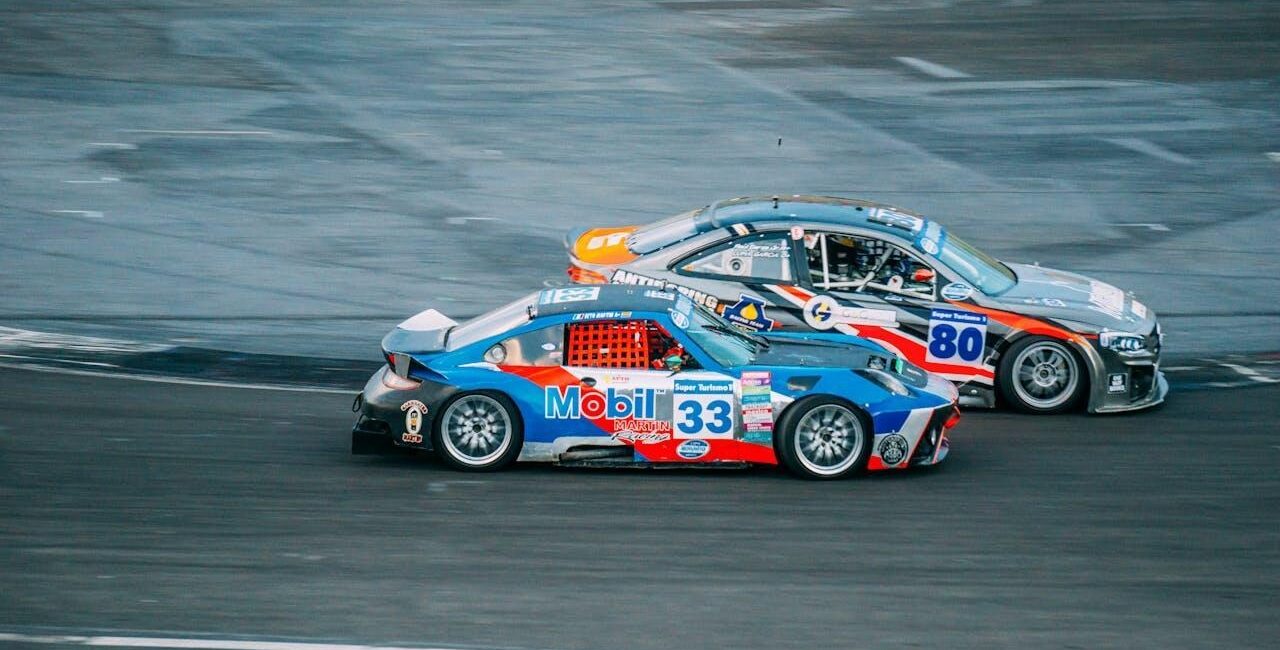
Motorsports typically take place over the course of several hours and may feature dynamic environments that include scenic coastal drives or even tearing runs through busy city streets. Horse racing takes place almost exclusively around a circular or oval-shaped track, and while the lead-up to an event might last for weeks, the actual race itself is typically done in under two minutes.
Regardless, it is fair to say that motorsports wouldn’t be what they are today without the influence of horse racing behind them.
Structural Overlap Between the Two Sports
The most obvious overlap between the two sports comes from their shared structure. This structure is visible in the form of track design. Racetracks are largely based on similar concepts to horse racing tracks. There is certainly variation, and there have been features developed in response to the differences between the two sports, but at their core, and especially from a historical perspective, automotive track design has been heavily influenced by the world of equine racing.
There’s also an internal structure that is comparable. In neither case are there teams in the same way that, say, Major League Baseball has teams. Yes, there are cooperating groups in horse racing, just as there are in automotive racing. However, the structure is more investment-based.
Ownership groups are responsible for both the equines and the car, as well as the drivers. Often in racing, these groups are car manufacturers themselves, such as Ford. With equines, it can be conglomerates or even just wealthy individuals with a taste for horses.
In either case, from an infrastructure perspective, both sports are similar.
Vocabulary
Horse racing and automotive sports also have a common vernacular. For example, the word paddock is used in both sports to describe where the horses or cars are kept in anticipation of the event.
These similar phrases that can be found between sports are an admittedly small connection, but they do speak to their commonality. At the end of the day, after all, both games are about speed in a contained environment.
Socioeconomic Status
Both sports are also associated with an exclusive socioeconomic status. This is more true for horse racing than it is for automotive sports.
Naturally, to own a horse, significant amounts of money are required. The people who race the animals are generally associated with a sense of privilege, even if that’s not exactly accurate. Indeed, breeding, racing, transporting, and taking care of a horse can cost as much as, if not more than, the same considerations that go into a race car.
Horse racing is typically also associated with a more exclusive socioeconomic class of viewers. This is certainly on display at major events, including the Kentucky Derby. You can find more information about horse racing and the upcoming Kentucky Derby here at TwinSpires.com.
That component is not necessarily carried over in automotive racing, which is often considered a working-class or blue-collar sport from the spectator side of things. As a participant, the equation is a little different.
Naturally, motorsports are an extremely expensive hobby. To be a racer requires money to own a qualifying car and the time to indulge in the pursuit.
In both cases, it is worth noting that the very wealthy are by no means the exclusive participants or witnesses to the sport. Yes, you do need either significant money or luck to get a seat at an event like the Kentucky Derby, but local racetracks are a free or very affordable way to experience horse races within your community.
Motorsports, as mentioned earlier, are already widely associated with a more working-class audience, but it’s also worth mentioning that there are still opportunities to learn and participate without spending extravagant sums of money.
Many of the world’s greatest racers, such as Ayrton Senna, started with go-karts and worked their way up to more expensive participation. People who show potential at an early age are often able to continue through sponsorships or investment groups.
Both games, ultimately, are for everyone. Like sports of all kinds, they unite people across culture and class.

Other Articles