

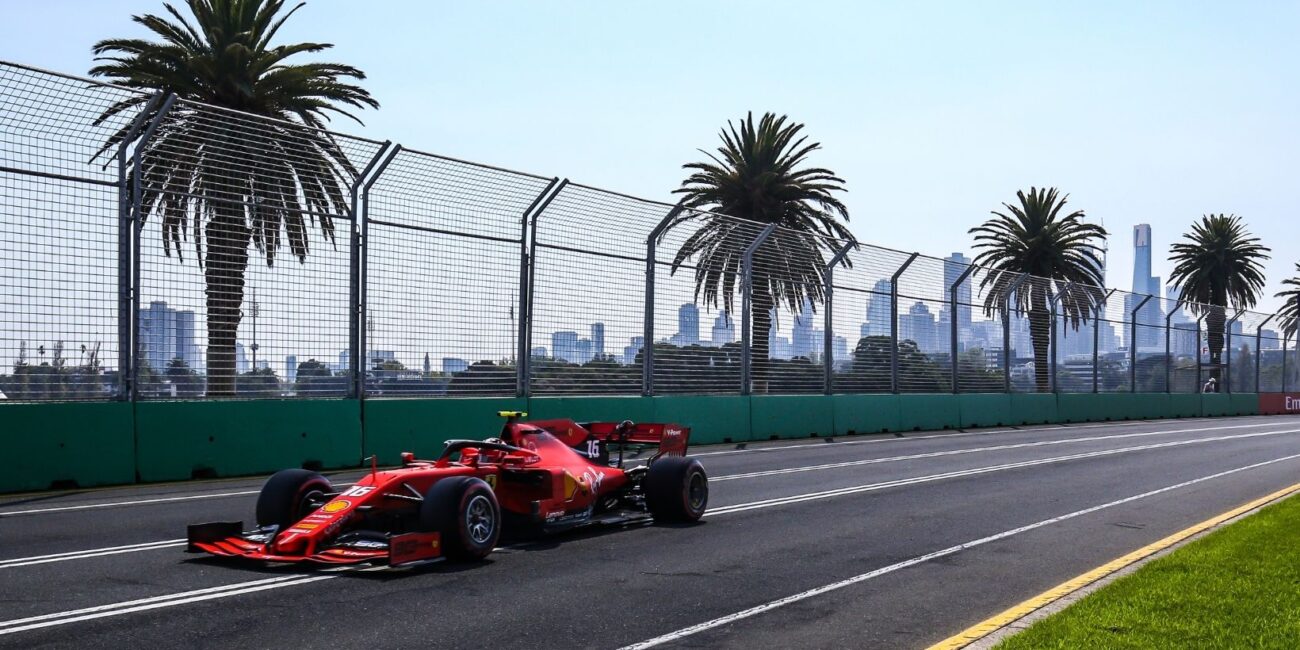
In the cockpit of a Formula 1 car, the environment is a chaotic, high-entropy symphony of heat, vibration, and extreme physics. Drivers are subjected to lateral loads between 4G and 6G during high-speed cornering, all while enduring cockpit temperatures that can spike to 50°C. In this “mobile data command center,” the margin of error is measured in milliseconds, and the cognitive load is immense. A single delayed brake or a mismanaged Energy Recovery System (ERS) deployment can cascade into a catastrophic loss of track position.While the driver is the visible executor of performance, the race strategist serves as the invisible architect of victory. Success in 2026 is no longer just about the fastest car; it is about the most efficient mind. Managing the real-time telemetry streams and variable track conditions requires a specialized blend of technical mastery and psychological resilience, turning the Grand Prix into a high-stakes chess match where the board is moving at 300 km/h.
The “Linchpin” of Red Bull: Hannah Schmitz’s Optimization Edge
In the high-pressure environment of the Red Bull pit wall, Hannah Schmitz has become the gold standard for strategic optimization. Following the 2026 departure of Will Courtenay to McLaren, Schmitz ascended to Head of Race Strategy, cementing her status as the team’s “linchpin.” Her edge isn’t just experience; it is rooted in a rigorous academic foundation—a Master’s in Mechanical Engineering from Cambridge, where she specialized in optimization theory and regression analysis.Before entering F1, Schmitz refined her approach as a Mechanical Team Leader for the Cambridge University Eco Racing (CUER) team in the World Solar Challenge. Today, she translates that “nerd energy” into world-class performance, using Monte Carlo simulations and complex statistical models to mastermind victories.”She is widely regarded as ‘the linchpin’ of the team… heralded for her ability to remain composed under high-stress situations and make pivotal calls that keep Red Bull on top.”By applying optimization theory to the volatile variables of a race—tire deltas, fuel loads, and dirty air—Schmitz ensures that the team isn’t merely reacting to the field, but actively forcing their rivals into sub-optimal windows.
The Efficiency Paradox: Why Elite Brains Use Less Power
A common misconception in performance analysis is that elite results require higher neural output. In reality, we observe the Neurological Efficiency paradox. Research by Bernardi et al. (2013) using fMRI data confirms that the brains of professional motorsport drivers actually expend fewer neural resources than novices. Elite brains are tuned to filter out “noise”—vibration, engine roar, and crowd distraction—to maintain physiological homeostasis.This efficiency manifests in how drivers process the track. As documented by Land and Lee (1994) , experts and novices use entirely different visual strategies:
- Proactive (The Expert): Elite drivers focus on the “tangent point” or the apex long before they arrive. They are navigating a “future” lap, relying on automaticity and the flow state.
- Reactive (The Amateur): Novices focus on the road immediately in front of the nose, experiencing the race in a state of constant, resource-heavy reaction.This “Neural Efficiency” allows a champion to preserve cognitive bandwidth for the critical 1% of decisions—like adjusting brake balance or ERS mid-corner—while the “driving” itself happens nearly subconsciously.
The Pit Wall War Room: Mastering the Undercut and Overcut
Strategy isn’t a guess; it’s a calculation of the pit window under variable conditions. The primary tactical maneuvers—the Undercut and Overcut—are modeled using AI to weigh tire degradation against the likelihood of a Safety Car.
| Tactic | Execution | Technical Logic |
| The Undercut | Pitting earlier than a rival to fit fresh rubber. | Leverages the “Tire Delta.” The immediate grip of new tires allows for a massive out-lap pace, leapfrogging the rival when they eventually pit. |
| The Overcut | Staying out on worn tires while the rival pits. | Utilized when the “out-lap struggle” is high—specifically when tires take time to “warm up.” If the rival’s new tires are cold, the leader can push on hot, worn rubber to stay ahead. |
These decisions are finalized in the “War Room,” where engineers analyze real-time telemetry to see if a driver can clear traffic. If a model predicts a driver will emerge in “dirty air” (turbulent wake), the strategist will delay the call, even if the tires are “off the cliff.”
The same instinct — gather data, model the variables, then commit — applies far beyond the pit lane. South African racing fans who enjoy adding stakes to a race weekend face an analogous decision problem: dozens of operators, wildly varying bonus terms, and no easy way to separate licensed platforms from unreliable ones. Bojoko.co.za functions as a pit wall for that decision, testing deposit methods, withdrawal speeds, and bonus conditions in-house before publishing any recommendation — so the user arrives at race start with a clear strategy rather than a reactive gamble.
These decisions are finalized in the War Room, where engineers analyze real-time telemetry to see if a driver can clear traffic. If a model predicts a driver will emerge in “dirty air” (turbulent wake), the strategist will delay the call, even if the tires are “off the cliff.”
The Fatigue Trap: Strategy is More Fragile Than Strength
One of the most vital insights for a Lead Analyst is the Limited-Resource Model of Self-Control . Cognitive fatigue does not impair raw anaerobic performance; a fatigued driver can still apply maximum pressure to a brake pedal. However, it absolutely devastates the “central executive” functions: tactical decision-making and pacing.When a strategist or driver reaches a state of ego depletion, they suffer “lapses of self-control.” In F1 terms, this means an inability to regulate the car’s pace. A driver might push too hard, killing the tires in three laps, or a strategist might miss a subtle environmental cue that signals a rain front. The physical body remains capable, but the mental “governor” required to manage the race’s longevity evaporates. This makes mental exhaustion far more dangerous than physical muscle fatigue; the latter slows the car, but the former loses the race.
Turning Corners: The “In Her Corner” Initiative
The 2026 Australian Grand Prix marked a watershed moment for the “In Her Corner” initiative. For the first time in history, a corner on an F1 circuit— Turn 6 at Albert Park —was dedicated to female engineering icons. The honor was shared by Hannah Schmitz and Laura Müller , the Race Engineer for Haas driver Esteban Ocon.Timed to coincide with International Women’s Day on March 8, this dedication recognizes the shift from a male-dominated history to a modern era where women are the primary strategists and engineers for world-class talent. It’s a validation that in the world of high-performance engineering, the only metric that matters is the accuracy of your models and the composure of your calls.

Other Articles