

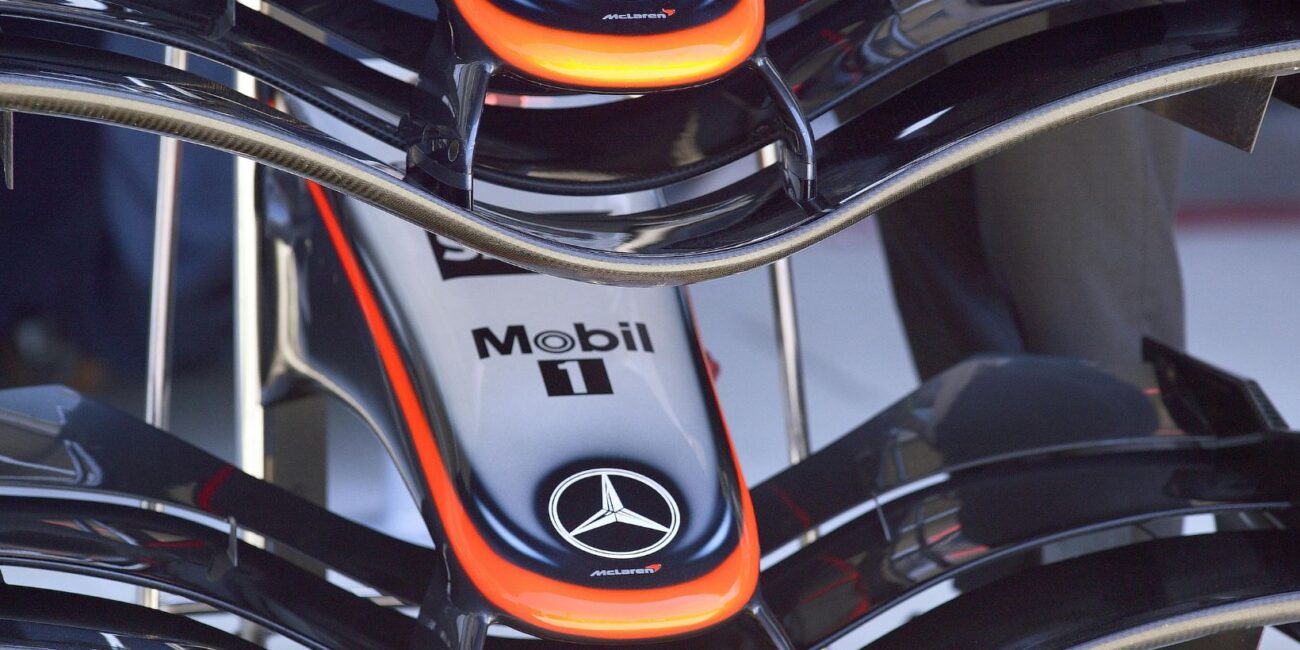
Mercedes has now become one of the most fascinating teams in Formula 1, not necessarily for its dominance, but for its unpredictability. The team has shown inconsistent levels of performance in the last couple of seasons, per circuit and even in practice, qualifying, and the race day itself. This inconsistency generates interesting storylines for fans and observers. To punters, it opens up an opportunity.
In the current F1 environment, where sportsbooks continuously adjust odds based on simulations, telemetry patterns, and the general mood, volatility can create opportunities to position strategically. Trying to find value in a sport bet market, savvy punters will usually not only look at who can be fast, but also at who is misunderstood in the market. Mercedes’ speed oscillations have once again demonstrated that not everything is measured by bare performance statistics.
Understanding Pace Variability in Modern F1
Pace variability is the discrepancy in lap times, race performance, and tire control across different tracks and conditions. Mercedes has shown great straight-line performance at certain venues, and then its ability to suffer tire degradation or turn corners at others. Such a discrepancy is caused by various technical and strategic factors, including aerodynamic setup windows, ride-height sensitivity, and tire operating ranges.
Compared to teams that deliver consistent performance across all circuits, Mercedes is at times very sensitive to track temperature, surface abrasiveness, and wind. Provided that these variables play to the car’s strengths, the team will be able to contend for podiums. When they fail to do so, the car may get caught up in the middle-field fight.
In the case of a bettor who has a sport bet on a race, pre-race odds can be distorted by this unpredictability. Bookmakers can overprice after a bad weekend or underprice Mercedes after a bad qualifying session, so there is potential value in other markets.
Qualifying vs Race Performance Gaps
Among the most intriguing aspects of Mercedes’s variability is the gap between qualifying speed and race pace. The team has been performing poorly in extracting one-lap performance in a few recent Grand Prix, but has shown good race pace in long stints. In other cases, a good qualifying performance did not lead to long-term race competitiveness.
This is an important dynamic to betting markets. Straight race winner odds can be based on qualifying, although podium, top-six and head-to-head markets can provide a more targeted opportunity. When a bettor recognizes that Mercedes is usually a better car in race trim, he or she can be offered good sport bet when it underperforms on a bad Saturday.
Live betting brings in a new dimension. Unless there are improvements in the in-play markets, early race stints may not reflect the improvement immediately, provided lap times are consistent and tire management is competitive. This leaves brief opportunities in which keen punters can take advantage, before odds are realigned.
Tire Strategy and Track Sensitivity
The variable that has characterized Mercedes’ season is tire management. In highly degraded tracks, the team’s strategy call becomes effective. The car sees a spike in performance when it is run within a limited temperature range. Pace drops significantly when that window is missed.
In the case of sport bet markets, it is imperative to know this pattern. Circuits like Barcelona or Silverstone, where tire control and aerodynamic efficiency are more vital, might be better suited to Mercedes than long straight tracks, which have low downforce. There can be clues in historical data from similar circuit types.
Variability is also increased by the weather. Lower temperatures could be favorable to the philosophy of the setup used by Mercedes, whereas excessive heat can reveal its weak points. The bettors who pay attention to weather predictions can predict possible changes in performance sooner than the sportsbooks change odds completely.
Market Overreactions and Psychological Bias
Data is not the only factor driving changes in betting markets. Whenever Mercedes fails to deliver a good weekend, most casual bettors lose their faith easily. This can overprice the next race, particularly if the next circuit is more favourable.
On the other hand, the impact of a strong podium finish can be to overprice odds, decreasing outright market value but increasing derivative market value, such as in fastest-lap or qualifying head-to-heads.

Determining these emotional fluctuations is key to deriving the value of a sports betting market. It is important to distinguish between structural and situational underperformance. Poor performance is not an indication of an underlying system issue; it can be a short-term issue between the car and the circuit.
Constructor and Driver-Specific Opportunities
There are also betting angles created by the internal dynamics at Mercedes. Head-to-head markets may be appealing when the performance of the car is different to both drivers. When one driver is more adaptive to changing track conditions, the odds may not necessarily reflect this advantage.
Variability is also met by the constructor championship markets. A series of good races can cut odds by half and a challenging triple-header can drive them away. Long-term punters who are ready to evaluate developmental trends might have value before major upgrades arrive.
The upgrades introduce an additional dimension. Mercedes’ development cycle usually features performance jumps between seasons. In the case of early sport bet markets, there is a risk that they are not up to date with the actual performance characteristics when new components are examined during practice sessions, where positive results are obtained.
The Role of Data and Simulation
The current Formula 1 betting market is heavily based on predictive modelling that uses simulation results, sector performance, and track data. Predictive reliability, however, is low when a group such as Mercedes operates within narrow setup margins.
There will be some level of consistency across simulation models. The confidence of a forecast reduces when it is a variable. This may bring about inefficiencies in pricing. Punters having tracked long-run rate in unpaid practice, studied sector splits and pulled out tire stints by hand are in some cases able to detect discrepancies that have been smoothed by algorithms.
Marginal gains are important during periods of intense competition. The uncertainty created by Mercedes’s fluctuating speed increases the possibility of value, and value is usually found where there is uncertainty.
Variability as Opportunity
The variability in Mercedes’ pace does not simply make the championship battle more dramatic; it creates an active betting atmosphere. In a sport where winning is decided in thousandths of a second, inconsistency can become a kind of treasure and not a threat.
When betting on a sport bet, it is necessary to understand the peculiarities of the suitability of the track, the maintenance of the tires, the gaps in their qualification, and the market psychology. Mercedes does not necessarily provide consistent dominance; however, unpredictability can also be profitable.
Ultimately, the key is preparation. Following the practice statistics, weather patterns, and the nature of the circuit enables the bettor to predict when the Silver Arrows is ready to take off on a rampage – and when it should keep their foot on the pedal. Variability is one of the least recognized values in Formula 1 gambling in a market where certainty is highly valued.

Other Articles

High-Performance Thinking: Racing and Digital Assets